Walkway Installation


5.0 Rating
Professional Walkway Design and Construction
Walkways do more than get you from one place to another—they guide how people experience your property, create visual flow between different landscape elements, and contribute significantly to your home’s curb appeal. I’ve learned that walkway installation requires balancing practical concerns like drainage and width with design considerations like material choice and how the path relates to surrounding plantings.
In Princeton, where many properties have established landscapes and mature trees, walkway installation often means working within existing constraints. We route paths to avoid root systems, accommodate grade changes, and create connections that feel natural rather than forced. The best walkways look like they’ve always been part of the property rather than additions imposed on the landscape.
Front Walkway Installation
Front walkways make first impressions and need to handle regular traffic from family, visitors, and delivery personnel. Width matters—narrow walkways feel pinched and don’t allow two people to walk comfortably side-by-side. We typically install front walks at least four feet wide, wider if the scale of the house calls for it.
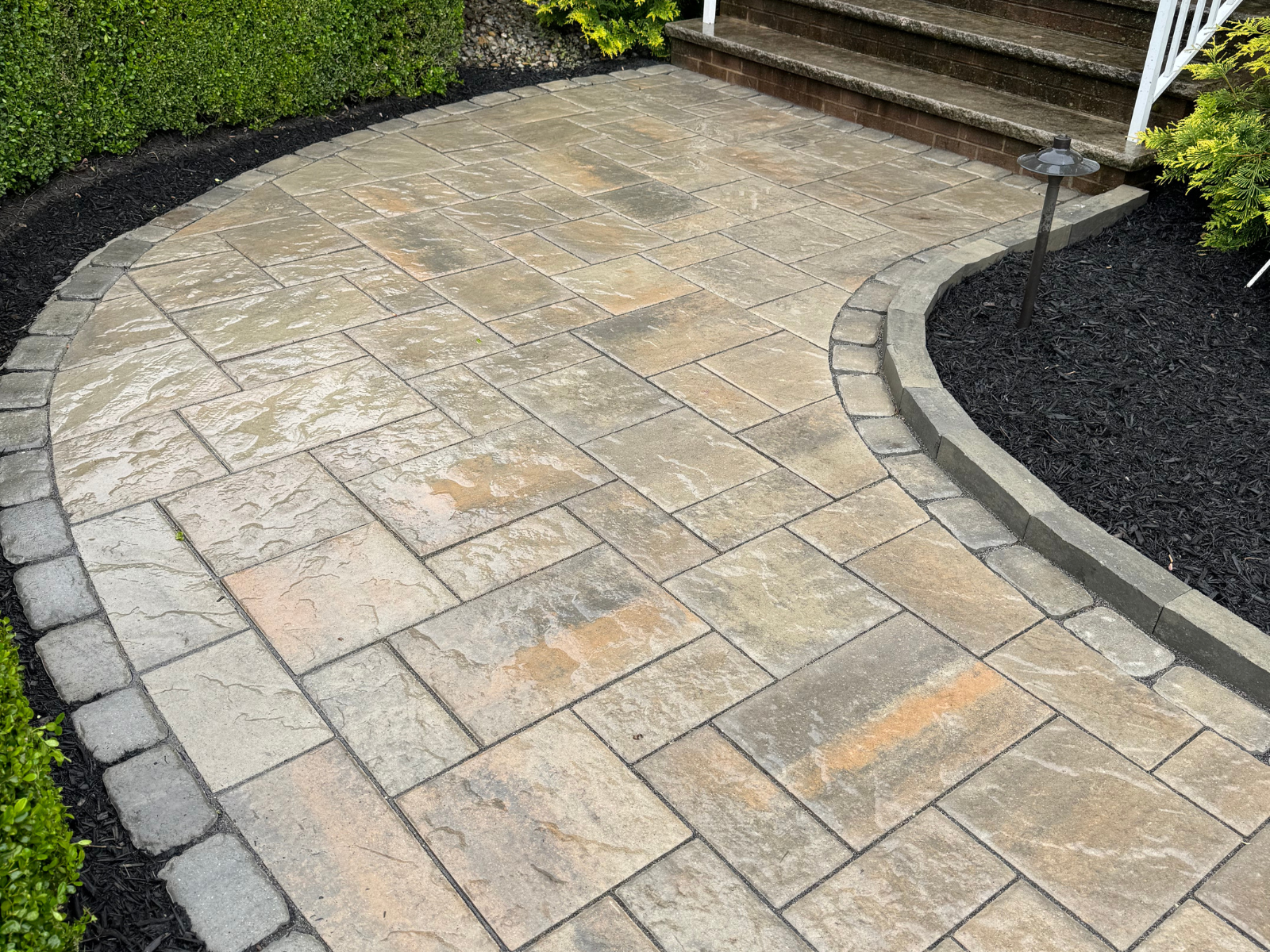
Material selection for front walkways should complement your home’s architecture. Brick walkways suit colonial and traditional homes common throughout Princeton. Bluestone works with both historic and contemporary architecture. Concrete pavers offer middle-ground pricing with good durability. We avoid materials that become slippery when wet or icy, prioritizing safety alongside appearance.
Garden Path and Backyard Walkway Design
Backyard walkways connect different outdoor spaces—from patio to garden shed, from deck to fire pit, from house to pool area. These paths can be more informal than front walks, using stepping stones through lawn areas, mulched paths through garden beds, or gravel walks with naturalistic edges. Width can vary based on use—service paths to utilities can be narrower than main circulation routes through entertaining areas.
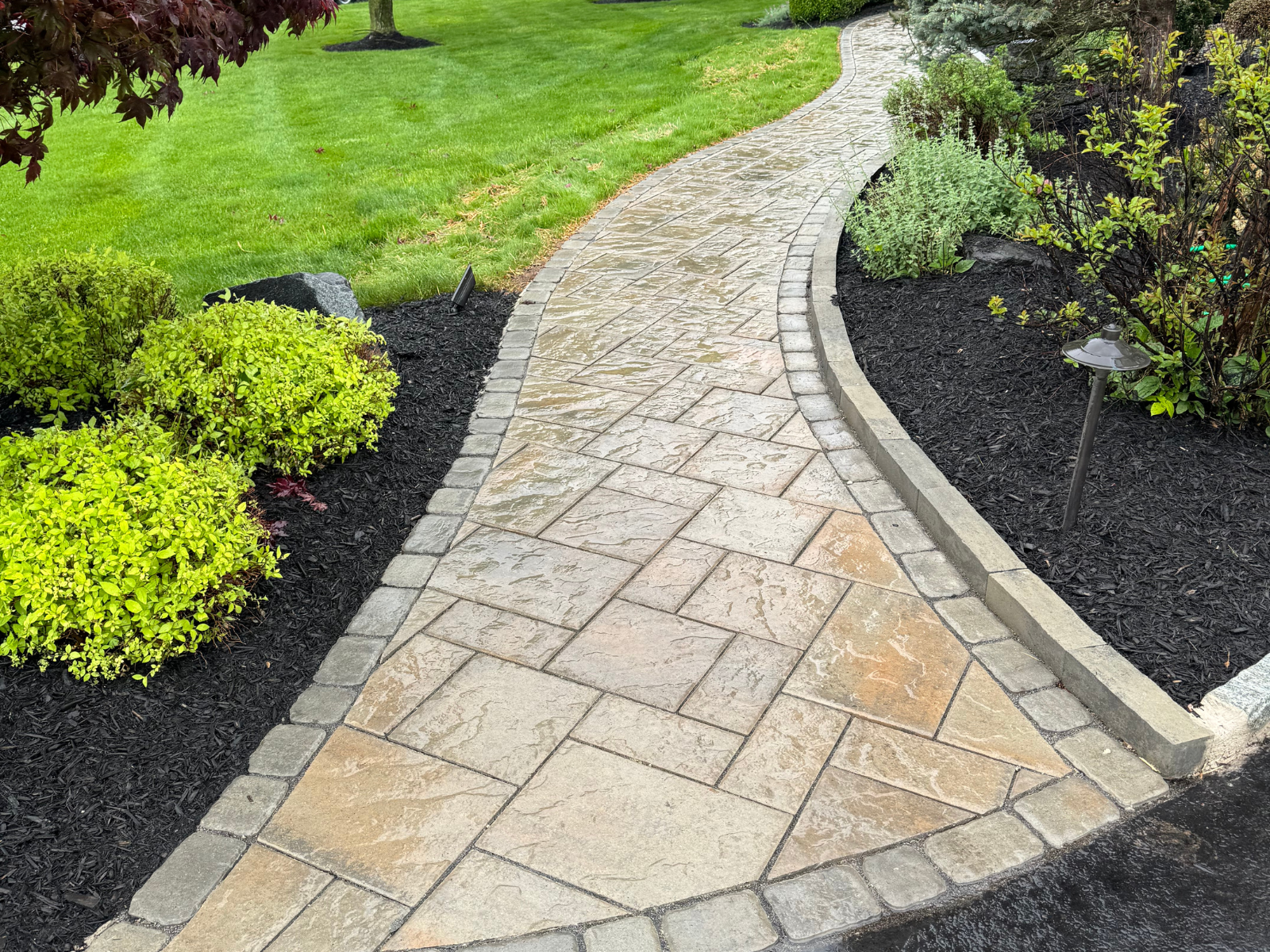
Curved walkways create more interesting visual journeys than straight paths and can make small yards feel larger by revealing spaces gradually. However, curves need to follow natural desire lines where people actually walk, not arbitrary arcs that look good on paper but frustrate users who cut across them. We observe how you currently move through your space and design paths that formalize those patterns.
Walkway Materials and Construction Methods
Paver walkways offer durability and design flexibility. We install them on properly prepared bases that prevent settling and ensure drainage. Patterns can match patio designs for visual continuity or use different layouts to distinguish circulation space from gathering areas. Soldier course borders keep edge pavers aligned and create finished edges.
Flagstone walkways provide natural, irregular beauty. Large stones set in lawn create informal stepping stone paths. Fitted flagstone with tight joints offers more formal appearance and easier navigation. We set stones at proper height—flush with lawn for easy mowing around stepping stones, or raised slightly above grade for paths through planting beds.
Gravel walkways work well for informal areas, side yards, and paths through wooded sections of properties. They require less excavation than paved walks but still need edging to contain material and landscape fabric to suppress weeds. Crushed stone compacts better underfoot than round pea gravel for primary walkways.
Walkway Edging and Border Plantings
Clean edges keep walkways looking intentional and prevent material migration. Metal edging provides nearly invisible containment. Stone or brick borders add decorative elements while serving functional purposes. Plantings along walkway edges soften hard lines and create corridor-like feelings that guide movement through the landscape.
We select border plants based on their mature size, ensuring they won’t overgrow the path within a season or two. Low groundcovers, compact perennials, and small ornamental grasses work better than shrubs that will eventually narrow the walkway. Spacing matters—plants need to fill in without creating maintenance headaches or forcing constant trimming to keep paths clear.
Walkway Lighting and Safety Features
Walkway lighting prevents trips and falls while creating ambiance. Path lights positioned every eight to ten feet provide consistent illumination without overlighting. We angle fixtures to light the walking surface rather than creating glare. Downlighting from nearby trees can supplement or replace path lights for more subtle illumination.
Steps and grade changes along walkways get special attention. Risers need consistent height—varying step heights cause trips. Tread depth should be generous enough for secure footing. Handrails might be necessary or required by code for longer runs of steps. We ensure transitions are obvious and well-lit, preventing stumbles in low-light conditions.