Patio Installation


5.0 Rating
Custom Patio Design and Installation
A well-designed patio fundamentally changes how you use your property. I’ve installed patios that transformed neglected backyards into spaces where families spend entire evenings, and I’ve seen how the right patio placement and size can make a small Princeton lot feel surprisingly spacious. The difference between a patio that gets used constantly and one that sits empty often comes down to decisions made during the planning phase—decisions about location, scale, and how the space connects to both your home and the rest of your landscape.
Princeton properties present interesting opportunities for patio installation. Historic homes in neighborhoods near Nassau Street might call for classic bluestone or brick that complements existing architecture. Contemporary homes in newer developments can handle bolder material choices and modern geometric layouts. Properties with elevation changes can incorporate multi-level patios that create distinct zones while working with rather than against the natural topography.
Patio Location and Layout Planning
Patio placement affects everything else about how the space functions. We evaluate sun exposure throughout the day—morning sun for coffee spots, afternoon shade for summer comfort, or western exposure for evening entertaining. We consider views both from the patio looking out and from your home looking toward the space. We assess access points and how traffic flows from interior rooms to outdoor areas.
Size matters more than people often realize. A patio that’s too small feels cramped once you add furniture and try to move around it. Too large, and it overwhelms the yard and feels empty unless you’re hosting significant gatherings. We calculate dimensions based on your furniture plans, typical guest numbers, and activity zones. A dining area needs different space than a lounge area, and most successful patios accommodate multiple uses.
Paver Patio Installation
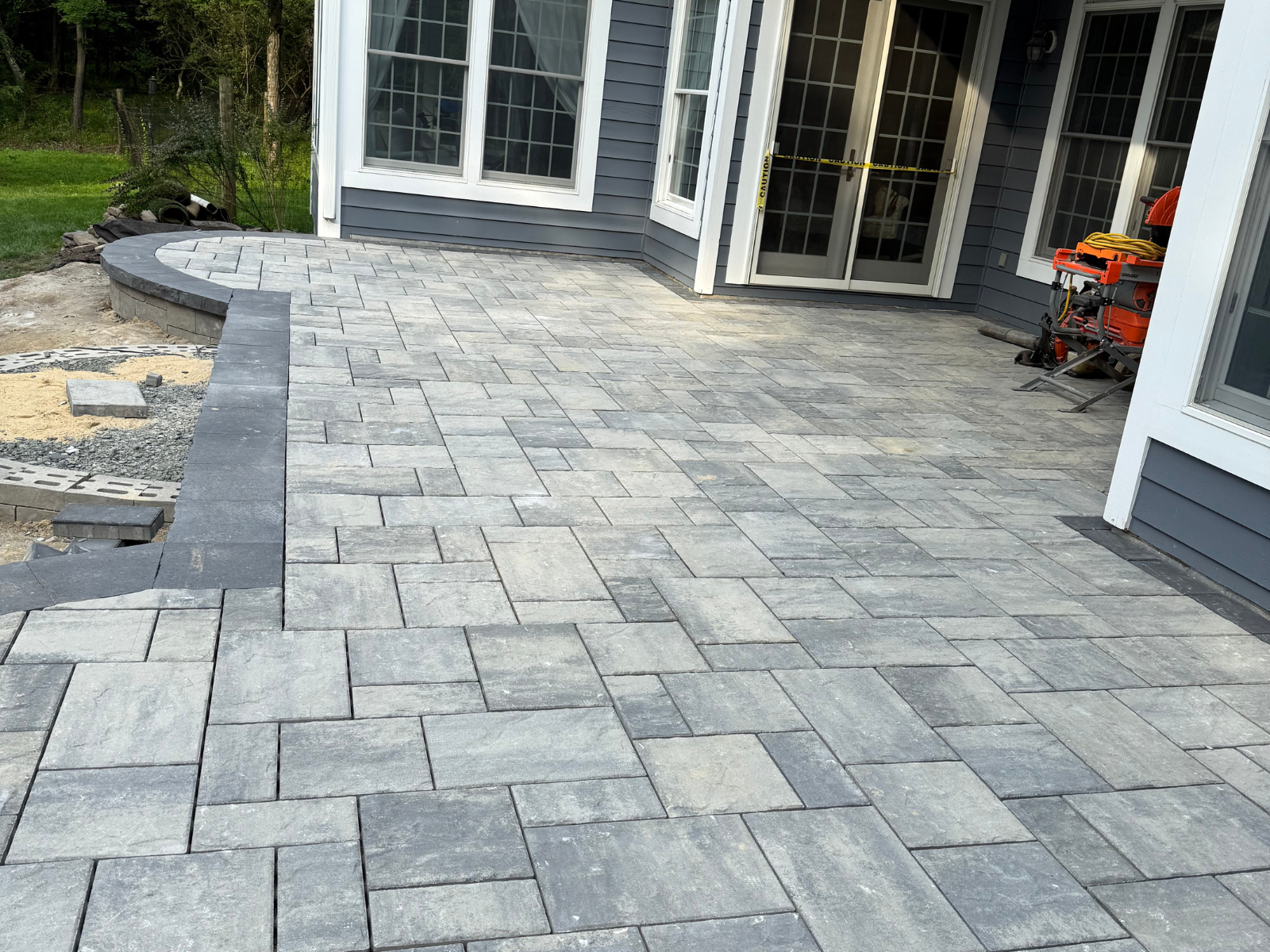
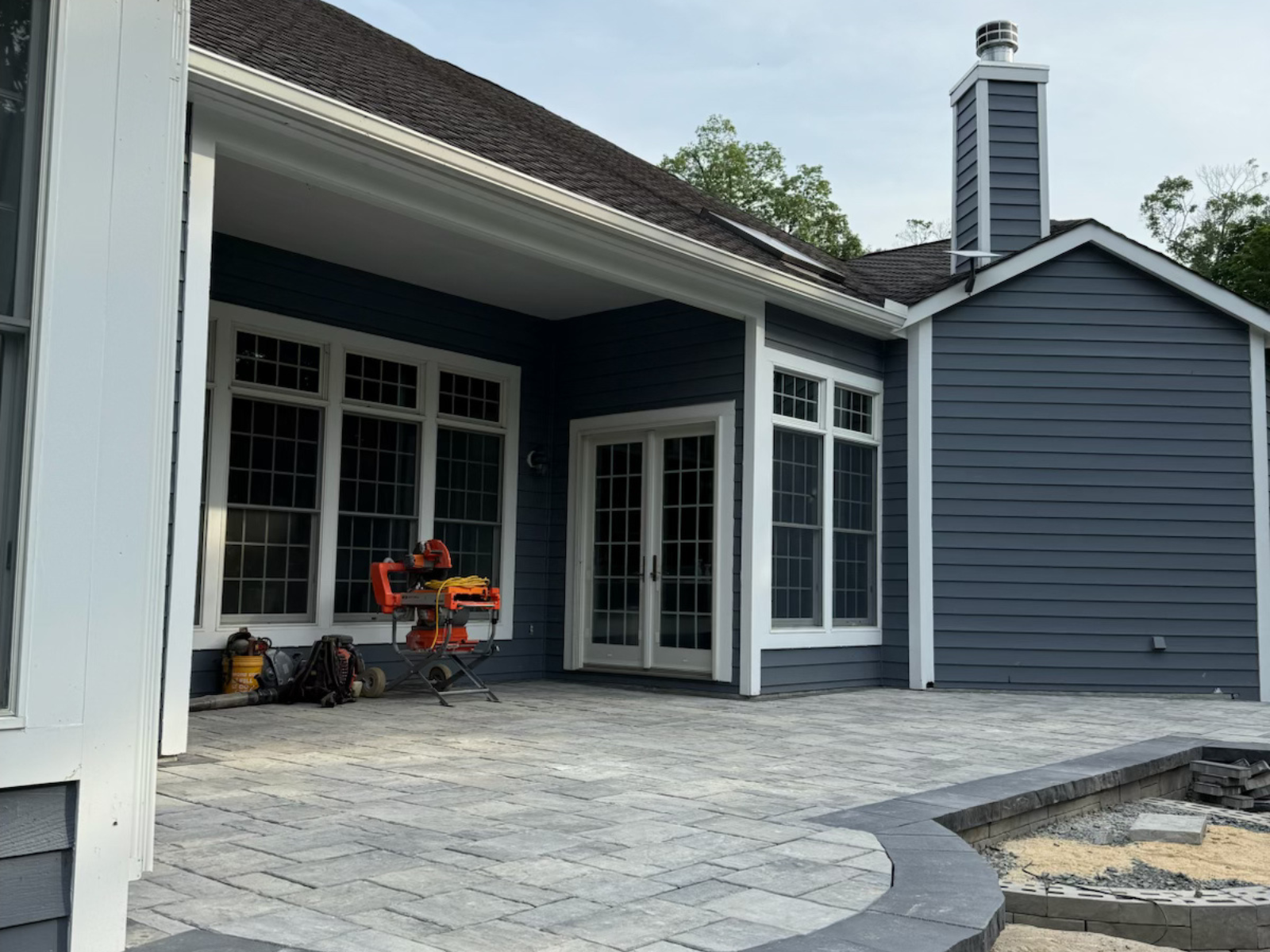
Paver patios offer design flexibility that solid surfaces can’t match. We create patterns ranging from simple running bond layouts to intricate designs incorporating border details and contrasting colors. Pavers handle Princeton’s freeze-thaw cycles better than poured concrete because individual units can shift slightly without cracking. If a paver becomes damaged, we can replace single units rather than repairing large sections.
Installation starts below the surface. We excavate to proper depth, accounting for base material, sand bed, and paver thickness. The base gets compacted in layers to prevent future settling. Edge restraints lock the perimeter in place. Sand fills joints between pavers and gets compacted to create a stable, unified surface. Proper slope ensures water drains away from your home rather than pooling on the patio.
Natural Stone Patio Construction
Natural stone patios bring organic texture and earth-toned variation that synthetic materials can’t replicate. Bluestone, with its blue-gray coloring, suits Princeton’s traditional architecture. Pennsylvania fieldstone offers warmer browns and tans. Flagstone provides irregular shapes that create casual, natural-looking layouts. Each stone type has characteristics that affect both appearance and installation approach.
Stone patios can be dry-laid on compacted stone dust for a traditional look with grass or groundcover growing between joints, or mortared onto concrete bases for more formal applications. Dry-laid patios feel softer and more garden-like. Mortared patios provide completely stable surfaces that are easier to keep clean and furniture-friendly. We help you understand the trade-offs and choose the approach that matches your aesthetic preferences and practical needs.
Patio Features and Enhancements
Built-in seating along patio edges adds functionality without requiring furniture. Seat walls with cap stones create boundaries while providing extra seating during gatherings. Planters integrated into the patio design bring greenery into the space without reducing usable area. These features get planned during initial design rather than added later, ensuring proper structure and cohesive appearance.
Patio borders define where the hardscape ends and planting beds or lawn begin. Borders might use contrasting paver colors, different materials like brick or cobblestone, or soldier courses that create visual frames. Beyond aesthetics, borders provide edge stability and clear transitions between different landscape zones.