Professional Tree Trimming Services in Princeton, New Jersey


5.0 Rating
Professional Tree Trimming Services in Princeton, New Jersey
Tree trimming done properly maintains tree health, improves safety, and enhances appearance. Working throughout Princeton’s tree-lined neighborhoods, I’ve trimmed everything from young ornamental trees needing formative pruning to mature oaks and maples requiring crown cleaning and deadwood removal. The difference between proper pruning and poor trimming is understanding tree biology—where to make cuts, how much to remove, and when to prune different species for optimal results without causing harm.
Princeton’s mature tree canopy creates the character that defines many neighborhoods from the Western Section to Riverside. These established trees need periodic maintenance removing dead branches, reducing hazards, and maintaining structure. Younger trees benefit from formative pruning establishing good structure early. Both require knowledge of proper techniques—incorrect pruning damages trees, creating decay, weak structure, and long-term problems that proper pruning prevents.
When I started Urban Landscapes, I committed to owner-led projects where I personally oversee tree trimming work. This hands-on approach, backed by full insurance, ensures pruning that follows arboricultural standards rather than arbitrary cutting. We provide complete tree trimming services with free estimates and exclusive discounts.
Crown Cleaning and Deadwood Removal
Crown cleaning removes dead, dying, diseased, and broken branches from tree canopies. Dead branches create hazards—they fall unexpectedly, potentially damaging property or injuring people below. Diseased branches spread problems to healthy portions of trees. Broken branches create entry points for decay organisms. Regular crown cleaning maintains tree health while reducing safety risks.
Deadwood removal requires identifying truly dead branches versus dormant or declining branches that might recover. We assess branch condition before cutting, removing only material that’s genuinely dead or hazardous. Proper cuts are made at branch collars—the swollen areas where branches meet trunks or larger limbs—allowing trees to seal wounds naturally without promoting decay.
Crown Reduction and Thinning
Crown reduction decreases tree size by pruning back to lateral branches, maintaining natural form while reducing height or spread. This technique helps trees that have outgrown their locations, are interfering with structures or utilities, or need size management. Proper reduction pruning maintains tree health and appearance—improper topping creates weak growth, decay, and unsightly results.
Crown thinning selectively removes branches throughout the canopy, reducing density while maintaining shape and size. Thinning improves light penetration to understory plants, reduces wind resistance on trees prone to storm damage, and allows better air circulation reducing disease pressure. We remove no more than 25-30% of foliage in single pruning sessions, preventing stress that weakens trees.
Structural Pruning for Young Trees
Young tree pruning establishes good structure preventing problems as trees mature. We identify and develop central leaders on species that should have single trunks. Competing leaders get removed or subordinated. Branches with weak attachments—narrow crotch angles that are prone to splitting—get removed early. Proper spacing between scaffold branches creates strong framework supporting future growth.
Formative pruning during a tree’s first years is more effective and less expensive than correcting structural problems in mature trees. Small cuts heal quickly with minimal impact. Problems addressed early don’t develop into hazards requiring costly correction later. We prune young trees on schedules appropriate to their growth rates and structural needs.
Safety and Hazard Pruning
Hazard pruning removes branches posing immediate safety risks—those overhanging buildings, threatening power lines, hanging over driveways or walkways, or showing signs of failure. Storm-damaged trees often need urgent pruning removing broken or partially attached branches. We assess hazards and prioritize removal based on risk levels.
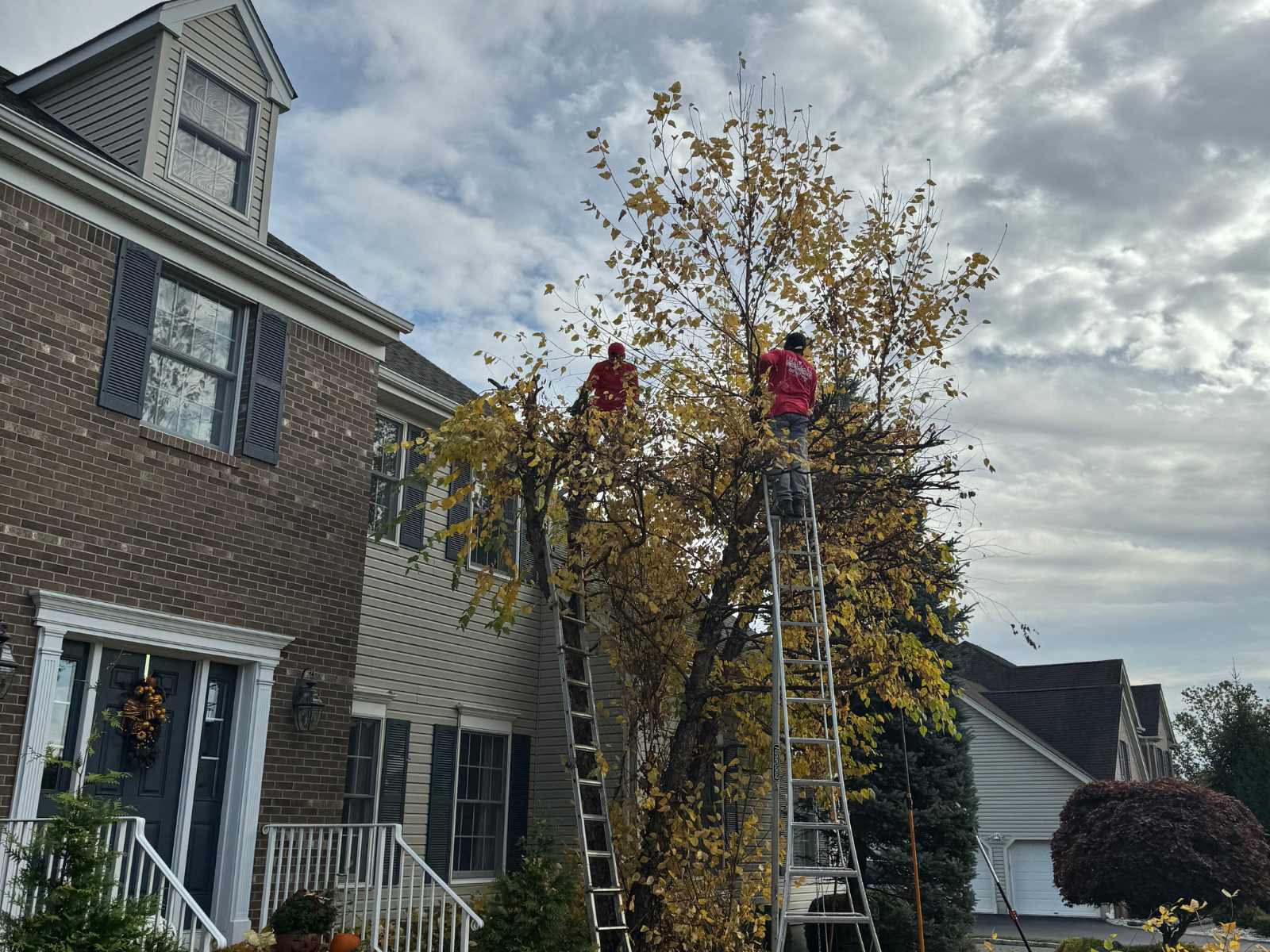
Safety pruning follows proper techniques preventing creation of new hazards. Cuts are made at appropriate locations allowing proper wound closure. Large branches are removed in sections preventing bark tearing and trunk damage. Rigging techniques control branch descent preventing property damage during removal.
Pruning Timing and Seasonal Considerations
Pruning timing affects tree response and wound closure. Most trees tolerate pruning year-round, but optimal timing varies by species. Late winter and early spring before growth starts is ideal for most deciduous trees—wounds close quickly as growth begins. Summer pruning slows growth, useful for controlling vigorous trees. Fall pruning is generally avoided as decay organisms are active and wounds heal slowly entering dormancy.
Flowering trees need timing consideration preserving bloom. Spring-flowering trees like cherry and magnolia are pruned after flowering to avoid removing flower buds. Summer-flowering trees are pruned in late winter before growth. We time pruning to species-specific requirements maximizing both health benefits and aesthetic results.
Proper Pruning Cuts and Techniques
Proper pruning cuts are made just outside branch collars—swollen areas at branch bases containing cells that seal wounds. Cuts flush to trunks remove protective tissues and promote decay. Cuts leaving stubs prevent proper closure and invite disease. We make cuts at correct angles and positions allowing trees to compartmentalize wounds naturally.
Large branch removal uses three-cut technique preventing bark tearing. An undercut prevents downward tearing, a top cut removes the branch, and a final cut removes the stub at the proper location. These techniques protect trunk bark and cambium, allowing proper wound response and minimizing damage.
Equipment and Cleanup
Professional tree trimming requires proper equipment—sharp pruning tools making clean cuts, ropes and rigging for controlled lowering, and safety gear protecting workers. We maintain equipment in good condition ensuring clean cuts that heal properly. Dull or damaged tools tear bark and create ragged wounds that heal poorly.
Complete cleanup follows all trimming work. Branches and debris get removed from your property. Wood can be cut for firewood if desired, chipped for mulch, or hauled away based on your preference. Your property is left clean and ready to enjoy immediately after work completion.