A fence has to do several things at once. It needs to look right for the property, hold up against New Jersey weather, fit the purpose you are installing it for, and stay within whatever your HOA or municipality allows.
Get the material wrong and you are either replacing it in ten years or maintaining it every season for the life of the fence.
The three materials that cover the vast majority of residential fence installations in Princeton are wood, vinyl, and aluminum. Each has a clear set of strengths and a clear set of limitations.
Wood: the classic choice with real trade-offs
Cedar and pressure-treated pine are the most common species used locally. A well-built cedar privacy fence looks genuinely beautiful against a Princeton landscape, ages gracefully when maintained, and can be stained or painted to match the exterior of the home.
For homeowners who want a traditional aesthetic or a privacy fence that blends into a naturalistic yard, wood is often the right answer.
The trade-off is maintenance. Wood needs to be stained or sealed every two to three years to resist moisture and the freeze-thaw cycling that accelerates rot in New Jersey's climate.
Post failure from ground moisture is the most common reason wood fences need structural repair. A well-maintained cedar fence lasts 15 to 20 years. One that gets irregular attention may need replacement in ten.
Vinyl: low maintenance with limitations
Vinyl does not rot, does not need painting or staining, and holds its color reasonably well over time. For a white picket fence along a front yard or a privacy fence along a property line, vinyl delivers a clean appearance with almost no annual maintenance beyond occasional washing.
The limitation that matters most in New Jersey is temperature performance. Vinyl expands and contracts significantly with temperature changes, and Princeton winters put real stress on panels and posts over time.
Lower-quality vinyl becomes brittle in cold weather and can crack on impact. Higher-grade vinyl with aluminum reinforcement inside the posts and rails handles cold weather better and lasts significantly longer than standard residential products.
Vinyl also offers less design flexibility than wood. It cannot be painted if you change your mind, and for properties where the fence needs to blend into a naturalistic landscape, the uniformity of vinyl can read as out of place.
Aluminum: the best choice for ornamental applications
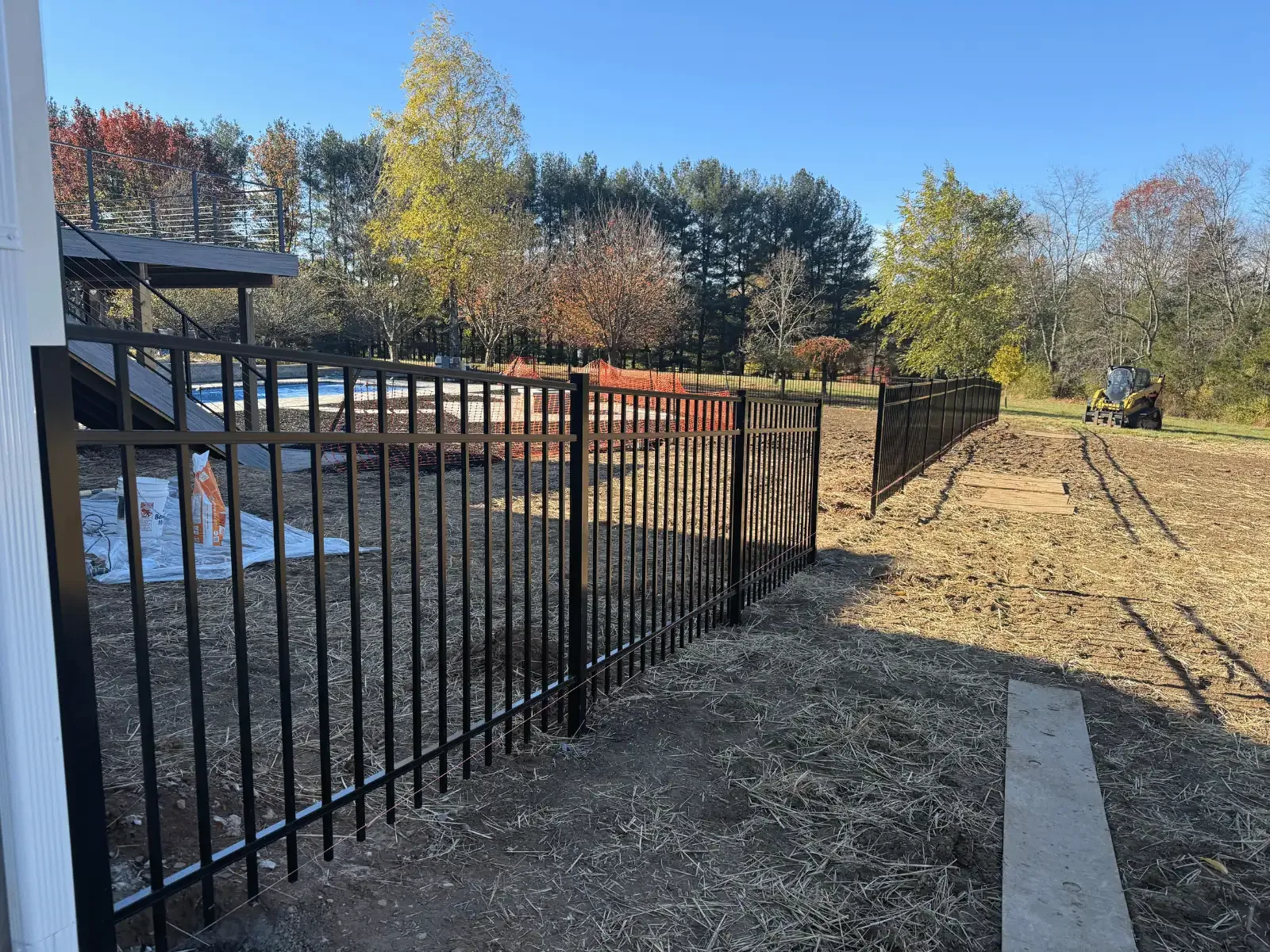
Aluminum does not rust, does not rot, does not need painting, and holds up against New Jersey weather indefinitely with essentially no maintenance. For decorative boundary fencing, pool enclosures, and front yard applications where visibility through the fence is appropriate, aluminum is the strongest choice available.
The limitation is privacy. Aluminum is an open-panel material — it defines a boundary and looks exceptional doing it, but it does not block sightlines. For pool enclosures specifically, aluminum earns its strongest recommendation.
It meets the height and self-latching gate requirements most Princeton municipalities and insurance carriers require, handles the wet environment around a pool, and looks far better than chain link at a comparable price point.
One thing to do before you build
Princeton Borough, Princeton Township, and surrounding municipalities all have fence regulations covering height limits and setback requirements. HOA rules add another layer in many neighborhoods.
A reputable fence contractor handles permit research as part of the project scoping process. If the contractor you are talking to has not mentioned permits, ask.
Installed right the first time
Urban Landscapes installs wood, vinyl, and aluminum fencing across Princeton, Hopewell, Montgomery, Pennington, and Hillsborough Township. We handle design, permitting, and installation from start to finish.
Call (732) 261-1689 or request a free estimate online.
Fall and early winter are a great time to plan — spring project slots fill faster than most homeowners expect.